



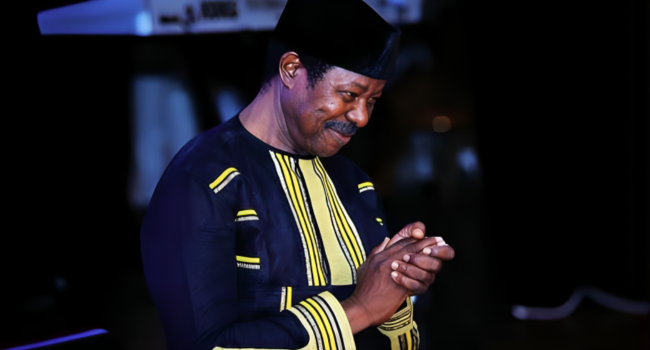
Legendary Jùjú musician King Sunny Ade celebrates his 80th birthday on September 22, 2026.
Born Sunday Adeniyi Adegeye on September 22, 1946, the master guitarist and cultural ambassador has spent over half a century as the definitive sound of Nigerian, especially Yoruba, high-society celebrations. KSA revolutionised traditional Jùjú music by introducing the electric pedal steel guitar, a sonic innovation that earned him two Grammy nominations and global acclaim.
The distinctive, weeping slide of his pedal steel, paired with the conversational thud of the gangan (talking drum), formed the soundtrack to generations of weddings, chieftaincy conferments, and Sunday afternoon family gatherings.
KSA took a localised, post-war Yoruba folk genre, Jùjú, and expanded it into an international stage spectacle that filled arenas from Lagos, Seattle, London and major cities across the globe.
Blueprint
Some of today’s global Afrobeats phenomenon owes a structural debt to KSA’s early innovations. Long before Nigerian pop stars were selling out Western arenas, King Sunny Adé was signing major international deals with Island Records in the early 1980s.
Prior to KSA, African bandleaders often stood static behind microphones or sat down during performances. Inspired by his background as a dancer, KSA strapped on his Fender Telecaster and introduced synchronised choreography across a 20-man band—a performance template visible today in the live shows of Burna Boy and Wizkid. The interlocking, multi-layered percussion arrangements that producers use in modern Afrobeats tracks were honed in KSA’s analogue studio sessions decades ago.
His discography remains a goldmine for modern artists. Adekunle Gold and Flavour famously lifted the groove of KSA’s 1982 classic “Ma Jaiye Oni” for their hit “Yoyo,” while internationally, American rapper Petey Pablo sampled the iconic rhythm of “Syncro System” for his 2001 track “I Told Y’all” (produced by Timbaland).
Anthems That Defined An Era
KSA’s vast catalogue delivered classic records that shaped generations of listeners’ memories. “Ja Funmi” (1982) served as a universal prayer for protection disguised as an irresistible dance track, becoming his international breakthrough record under Island Records. The following year brought “Synchro System” (1983), a fast-paced, Grammy-nominated title track that proved Yoruba lyrics and complex Jùjú rhythms needed no translation to move global crowds.
His 1982 mid-tempo masterpiece, “Ma Jaiye Oni,” stood out as the ultimate “live in the moment” anthem, codifying the relaxed luxury of post-oil-boom Nigerian celebration culture. Years earlier, “Ariya” (1976) laid the groundwork as an early masterpiece that remains a definitive sound for event entertainment.
The Last Jùjú King?
As KSA enters his ninth decade, his milestone raises a sobering question for music historians: Is he the last of the great Jùjú monarchs?
Unlike modern Afrobeats, which thrives on digital production, three-minute song lengths, and streaming algorithms, classic Jùjú is an expansive, live-performance art form. It requires massive orchestras, extended guitar improvisations, and deep mastery of Yoruba poetic praise-singing.
With the deaths of contemporaries like Chief Commander Ebenezer Obey’s long retirement from secular music, no young artist has successfully built a mainstream career on traditional Jùjú at KSA’s scale. The economic reality of touring a 20-piece band in the digital streaming age has forced younger musicians toward hybrid, electronic sounds.
Whether a true successor emerges or Jùjú evolves into new sub-genres, one fact remains clear: King Sunny Adé’s throne remains undisputed, and his catalogue remains timeless.